Dual firewalls protection
Dual Firewall : Netgate/pfsense at front line, Fortinet/Sophos/Watchguard on intranet to protect internal network
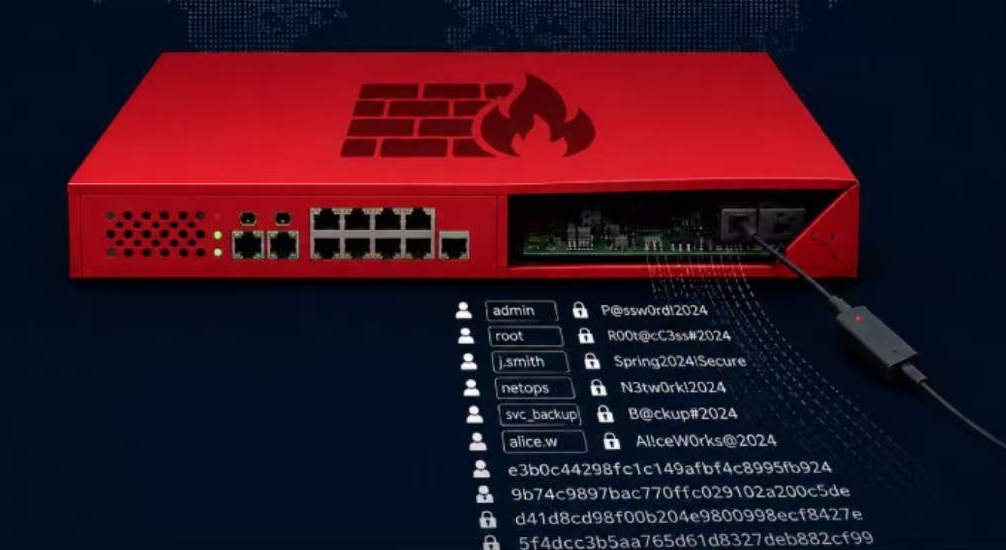
FortiBleed successfully breaching over 430,000 Fortinet FortiGate firewalls worldwide.
Global cybers ecurity firm SOCRadar exposed a large-scale credential theft operation codenamed FortiBleed, orchestrated by a Russian-speaking Initial Access Broker (IAB) hacking group. Since February 2026, the group has conducted automated mass scanning across the internet, successfully breaching over 430,000 Fortinet FortiGate firewalls worldwide. After gaining access to compromised devices, threat actors deployed custom traffic sniffers to capture plaintext user credentials and password hashes traversing the network. In total, more than 110 million sets of stolen credentials were harvested.
Trusting all corporate cybersecurity assets to one single firewall is equivalent to guarding all valuables behind a single unlocked door. To mitigate critical risks including device compromise and credential interception exposed by the FortiBleed incident, the optimal mitigation strategy is to deploy a heterogeneous dual-firewall in-depth defense system: Netgate pfSense deployed as the frontline internet perimeter gateway, paired with FortiGate as the backend internal security gateway.
A. Root Vulnerabilities Exposed by the FortiBleed Attack Chain
- Hackers run global scanning bots to detect publicly exposed FortiGate administrative ports, exploiting known vulnerabilities or brute-forcing weak passwords to gain full administrative privileges over firewalls;
- Threat actors deploy custom packet-sniffing malware on compromised firewalls to monitor all inbound and outbound traffic crossing the network boundary;
- The malware automatically extracts plaintext login accounts, AD domain password hashes, and SSL VPN access credentials from captured traffic;
- Stolen credentials are decrypted and exfiltrated to hacker command-and-control servers. Attackers then leverage valid credentials to conduct lateral movement against internal business servers
Enterprises maintain only one layer of perimeter isolation. If the FortiGate firewall is breached via an exploit, there exists no secondary barrier separating internal and external networks. All business traffic travels unprotected, allowing hackers to intercept every username and password in transit. Even if administrators apply emergency security patches, single-layer defense remains vulnerable to future zero-day exploits with no fallback protection.
B. Deploy Netgate pfSense as the First Line of Heterogeneous Defense
1. Hide Backend Firewalls & Minimize External Attack Surface
Migrate all FortiGate web GUI and SSH administrative interfaces to isolated internal VLANs, removing direct public internet exposure. All inbound internet traffic first passes through Netgate pfSense for initial filtering. External threat actors cannot probe or discover backend FortiGate appliances, eliminating mass scanning and brute-force targeting of firewalls at the source.2. Front-End Traffic Scrubbing to Block Scanning & Brute-Force Intrusions
- Deploy pfBlockerNG to block IP ranges linked to overseas hacking collectives, neutralizing large-scale global scanning operations
- Enable SSHGuard to automatically blacklist IP addresses conducting high-frequency credential brute-force attempts
- Restrict port forwarding to only business-critical services, disabling all unused public-facing ports entirely
- Integrate the Suricata intrusion detection engine to identify suspicious packet sniffing and credential interception activity, terminating malicious network sessions instantly to prevent credential harvesting
3. Cut Off Exfiltration Channels for Stolen Confidential Data
In worst-case scenarios where the backend FortiGate is compromised by an unpatched vulnerability, any credential data captured by planted sniffers cannot bypass the Netgate pfSense gateway for external exfiltration. This breaks the complete credential theft kill chain, ensuring sensitive data cannot be leaked outward even if the internal security gateway is fully compromised.
C. Recommended Serial In-Depth Deployment Topology
→ Traffic Filtering, Anti-Scanning, IDS Intrusion Prevention, Backend Device Obfuscation
→ Fortinet FortiGate (Internal Security Gateway: Application Identification, Malware Scanning, Full SSL Decryption)
→ Corporate Office LAN, Active Directory Domain Controllers, Server Datacenter
D. Core Business & Security Benefits of the Dual-Firewall Architecture
- Heterogeneous Isolation Against Mass Compromise: Two fully independent operating systems eliminate shared exploit chains that could breach all perimeter appliances simultaneously
- Minimized Attack Surface: Internal firewalls are hidden from the public internet, shielding infrastructure from automated global scanning campaigns
- Block Credential Data Exfiltration: Prevents mass theft of usernames and passwords if firewalls are infected with packet-sniffing backdoors
- Maximize Return on Existing Investments: No full replacement of deployed FortiGate hardware is required; businesses only add a front-end pfSense gateway for minimal upgrade costs
- Dual-Layer Log Auditing: Both firewalls maintain independent full traffic logs, enabling cross-verified traceability for abnormal packet capture and suspicious credential access behavior
E. Specialized Hardening Checklist for Mitigating FortiBleed-Style Attacks
- Enforce strict port restriction policies on Netgate pfSense to fully conceal all public-facing FortiGate administrative entry points
- Activate intrusion prevention signatures to block packet capture and plaintext credential sniffing activity
- Configure outbound traffic governance to restrict bulk external transmission of password hash datasets originating from internal networks
- Maintain fully separate administrative account credentials across the two firewalls to prevent cascading breaches from a single leaked admin password
- Enable automated configuration backups for both firewalls to block persistent backdoors planted via tampered security policies
Closing Remarks
Single-layer perimeter defense can no longer withstand today’s automated large-scale hacking operations.
By adopting the Netgate pfSense frontline protection + Fortinet backend security gateway heterogeneous dual-wall solution, enterprises retain FortiGate’s robust application-layer threat prevention capabilities while erecting an isolated external perimeter barrier. This architecture blocks scanning intrusions, credential sniffing, and lateral movement threats at the internet edge, filling critical network perimeter gaps with minimal investment to fully safeguard corporate user accounts and core confidential data.